Bill of Materials Explained for SMBs
Learn how multi-level Bills of Materials streamline raw material procurement, calculate accurate cost of goods, and optimize assembly cycles.
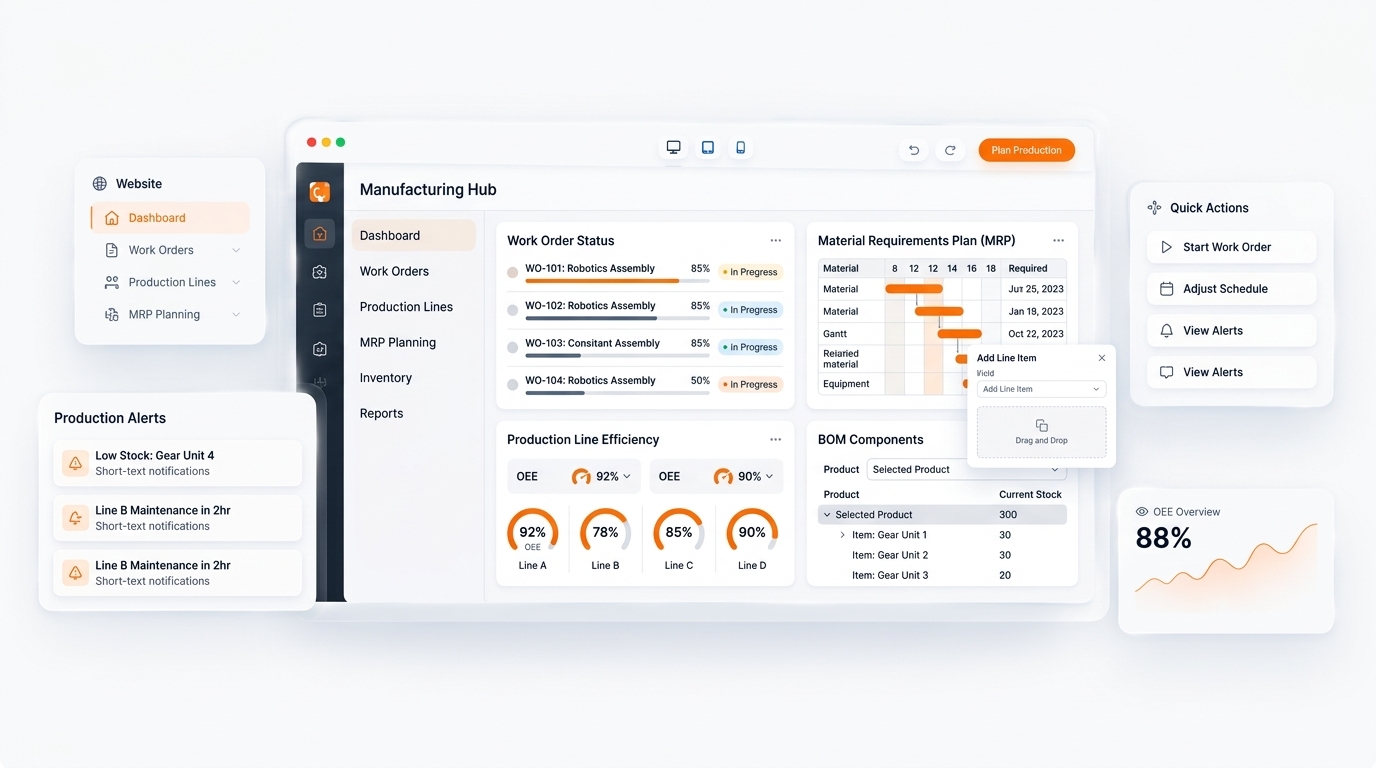
Learn how multi-level Bills of Materials streamline raw material procurement, calculate accurate cost of goods, and optimize assembly cycles. In modern competitive markets, disconnected operations create invisible friction, delayed reporting, and customer churn. This blueprint outlines how growing organizations deploy agile, connected workflows that scale with zero administrative overhead.
- Multi-Level BOM Structures: Define exact raw material components, sub-assemblies, and labor routing operations for finished goods.
- Automated Material Reservations: Manufacturing orders automatically reserve required raw materials and flag procurement shortages.
- Precise Cost of Goods Sold (COGS): Calculate exact production expenses by factoring in raw component prices, machine hours, and labor rates.
- Quality Inspection Checkpoints: Embed mandatory quality checks and lot inspections directly into production routing stages.
1. What is a Bill of Materials (BOM)?
A Bill of Materials is the complete engineering recipe required to manufacture a finished product. It lists every raw material item, sub-component assembly, work center operation, and expected labor hour needed to bring goods to completion.
2. Automated Raw Material Reservation and Shortage Detection
When sales teams confirm a large manufacturing order in C36Space, the system checks raw material inventory against the BOM recipe. If components are missing, the system generates draft purchase orders for suppliers immediately, preventing production line shutdowns.
3. Accurate Production Costing
Small manufacturers often underprice finished goods because they overlook machine wear, labor setup times, and sub-assembly scrap rates. C36Space tracks actual vs. expected production costs, ensuring healthy gross profit margins on every finished batch.

Next Steps & Implementation Roadmap
Transitioning to a unified workspace does not require months of downtime. By leveraging modular cloud provisioning, organizations deploy core operations workflows in parallel with existing processes, verifying data accuracy before switching live operations. Explore the related architecture guides below or activate your free 14-day trial to experience unified operations firsthand.
Ready to optimize your business operations?
Activate your 14-day free trial of C36Space. Unify CRM, invoicing, payroll, and inventory in one connected workspace.